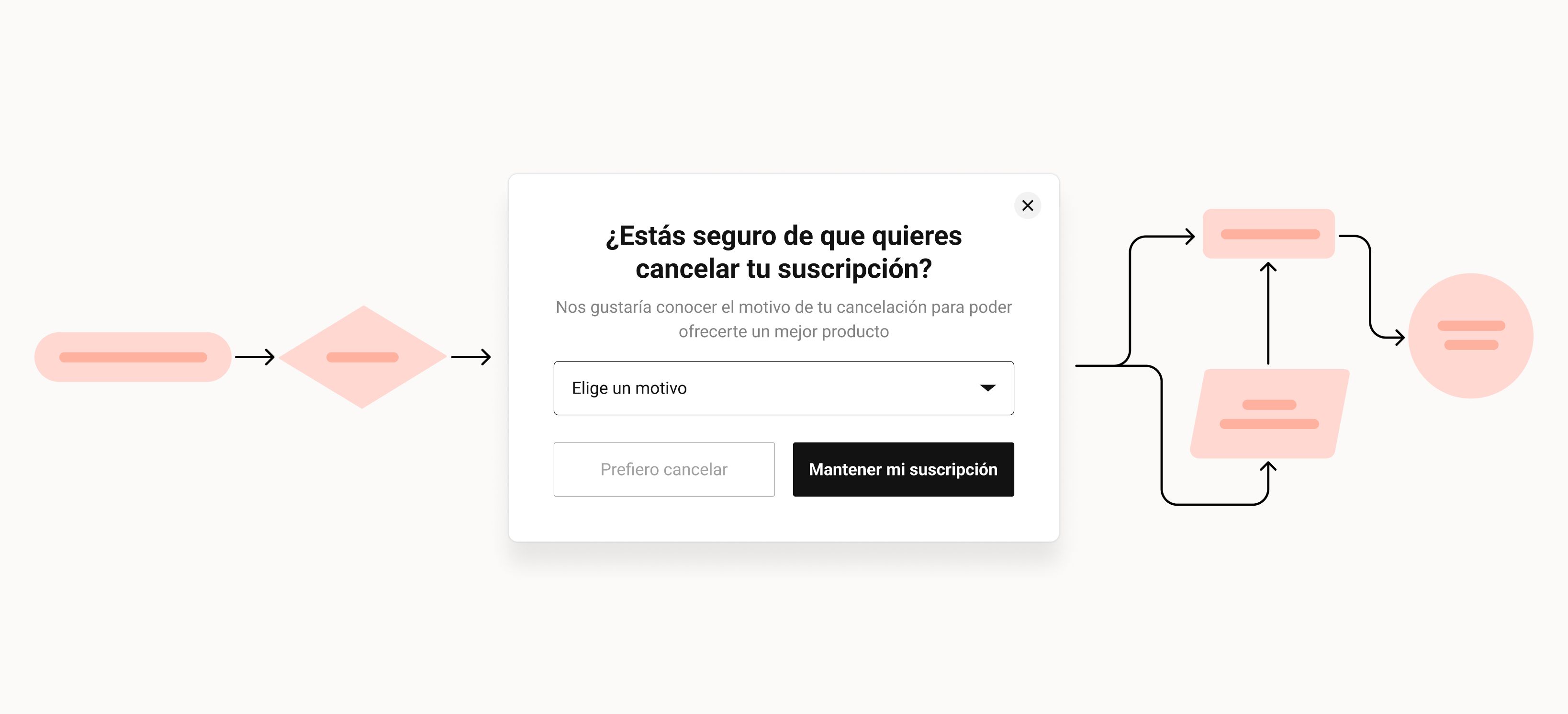
I designed El Confidencial’s first subscription off-boarding flow. It replaced instant cancellation with an adaptive process that retains a steady ~27% of users entering to cancel, captures the cancellation reason from 95% of users who reach the in-flow survey, and has held up over time as the foundation the team has built retention layers on — most notably the Wall Street Journal bundle added later.
I started by studying how Netflix, Amazon, and Spotify handle cancellations — tone, retention tactics, and how much friction they accept. From there I distilled three principles that ended up shaping every screen of the flow: clarity over friction (show the active period and next billing date upfront, instead of hiding it), autonomy (the user decides; the screens offer context, never ask for permission), and contextual feedback (each cancellation reason is treated differently — a single “we’ll miss you” for everyone is just noise).
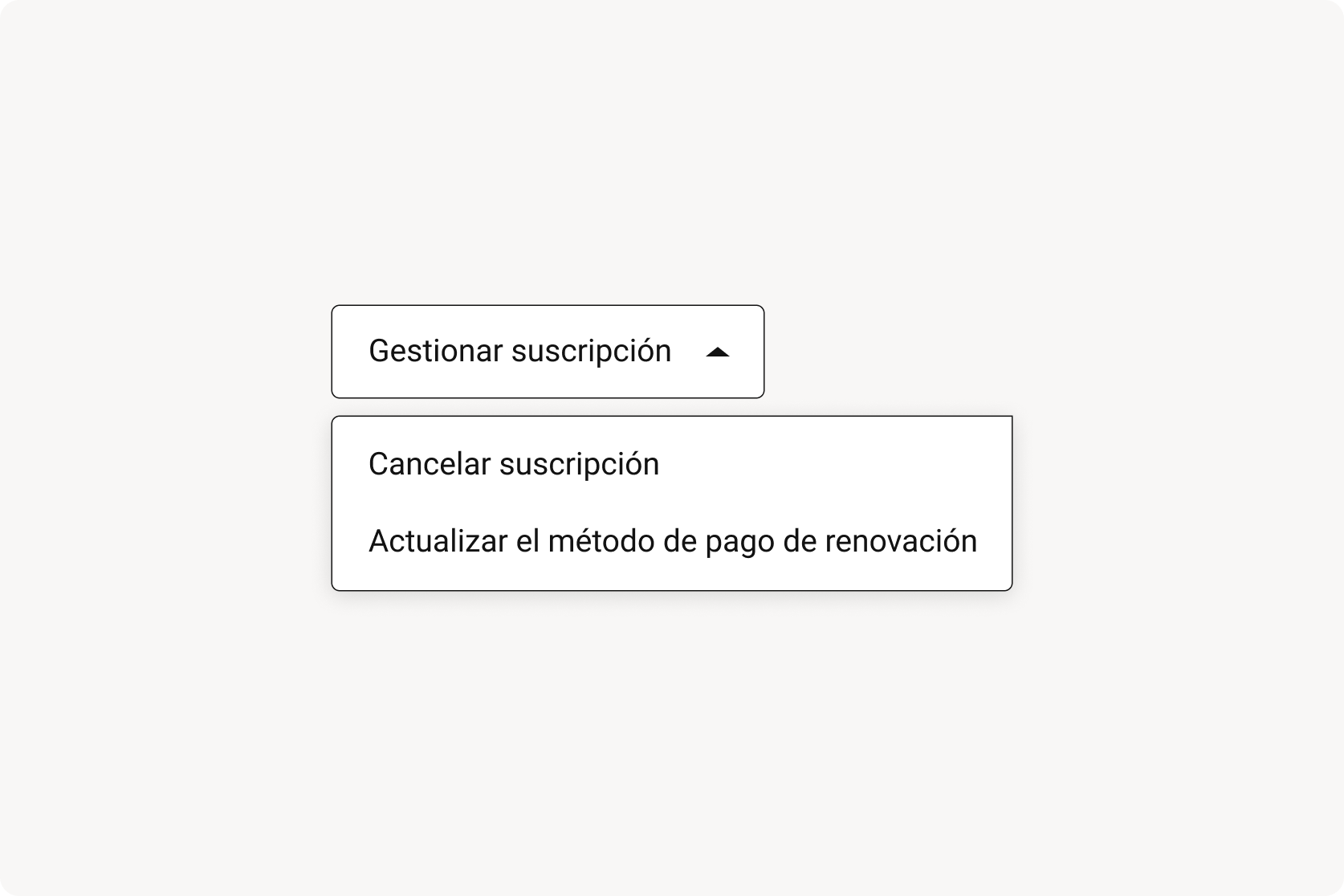
El Confidencial had no structured off-boarding experience. Cancellation was a single click → instant unsubscribe. Zero information about the reason. Zero opportunity to retain. Zero structured feedback for the product team. Customer Support also flagged that a meaningful share of these cancellations were accidental — users confusing “update payment method” with “cancel my subscription.” The goal was to design a flow that reduced voluntary churn while turning every exit into a piece of usable feedback.
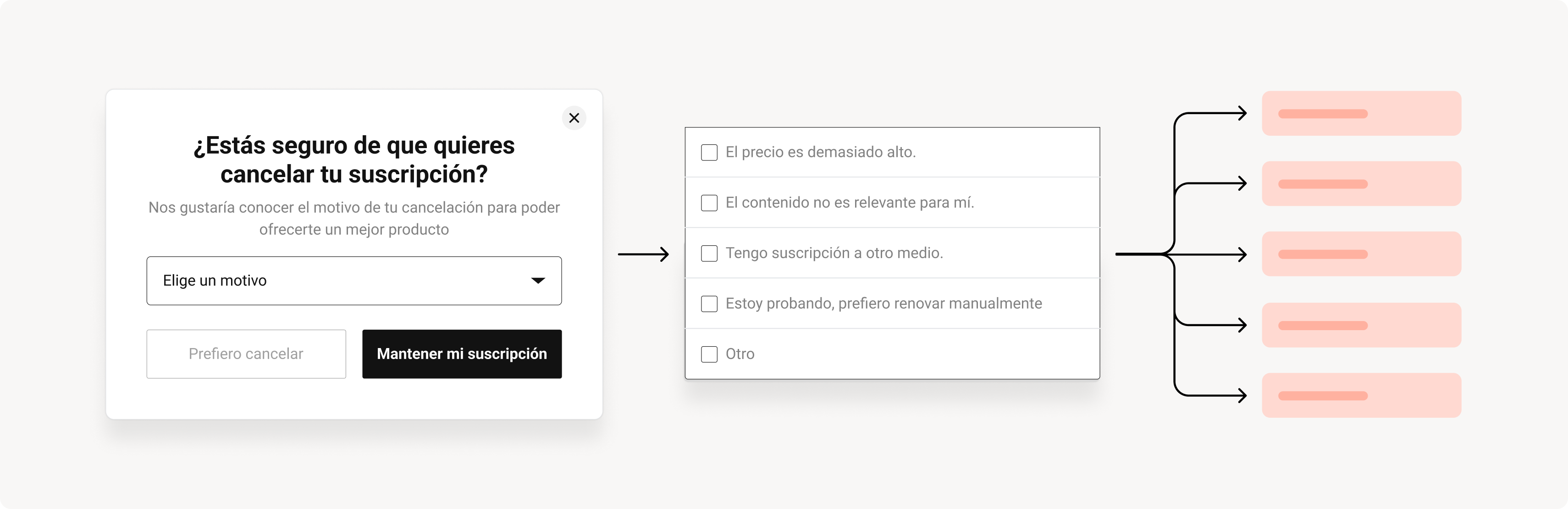
A core decision drove everything else: the declared cancellation reason decides the next screen. The motive survey isn’t a form at the end — it’s the logic that moves the flow. Someone leaving because of price sees a different path than someone leaving because of usage or content fit. The flow listens first, then offers.
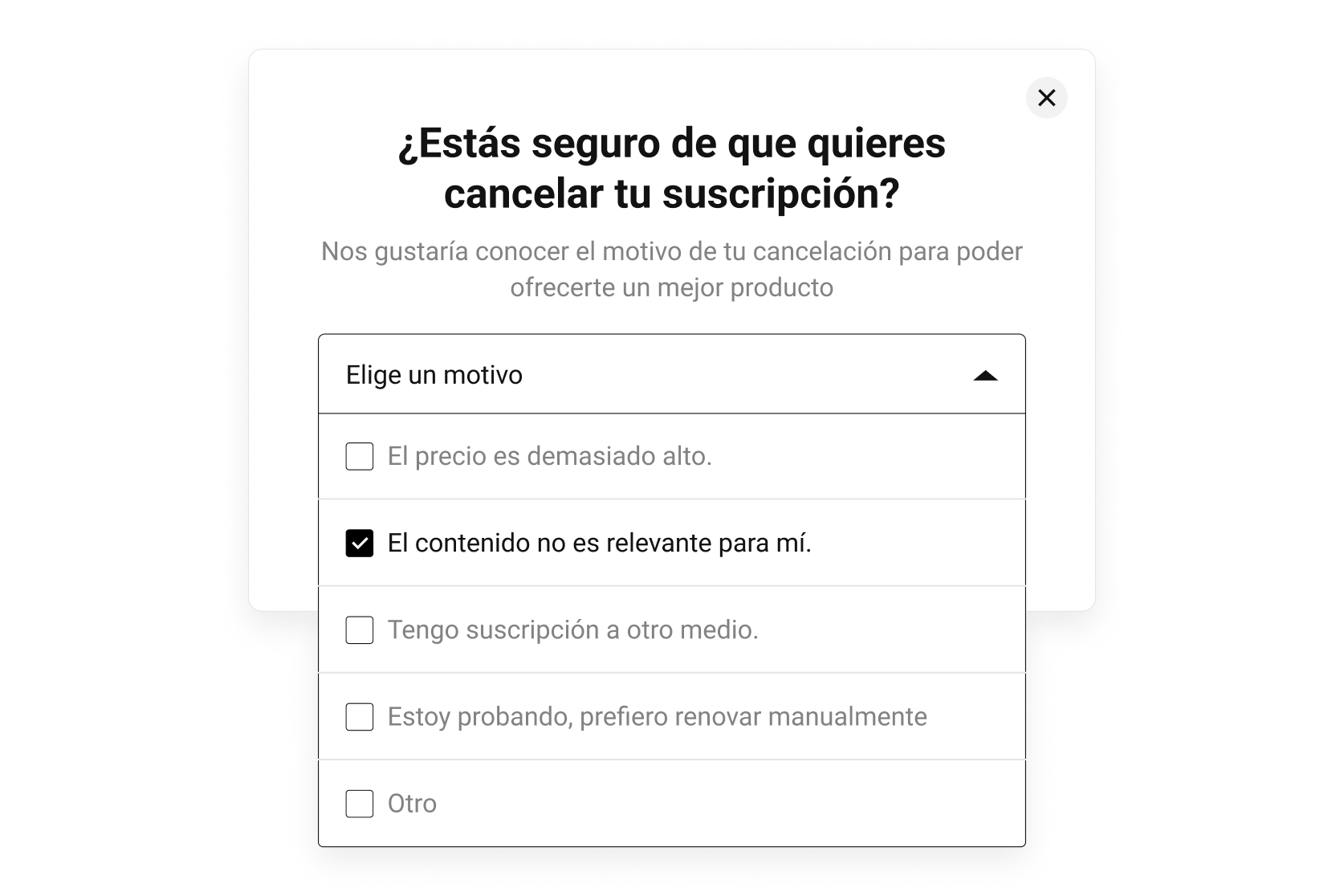
The flow opens by confirming the user’s intent. The first modal makes the consequence concrete: the exact date on which access ends, and three direct paths to support (chat, email, phone). Those support links are deliberate — a meaningful slice of cancellations turn out to be users hitting a payment problem, a technical error, or a feature that isn’t working for them. They don’t actually want to leave; they want something fixed. Exposing this upfront — instead of hiding it — turned out to be the decision that paid for itself: ~7% of users entering the flow back out here, before seeing any retention offer. The transparency disarms the “cancel by mistake” case and gives support the chance to catch real friction before it becomes a churn event.
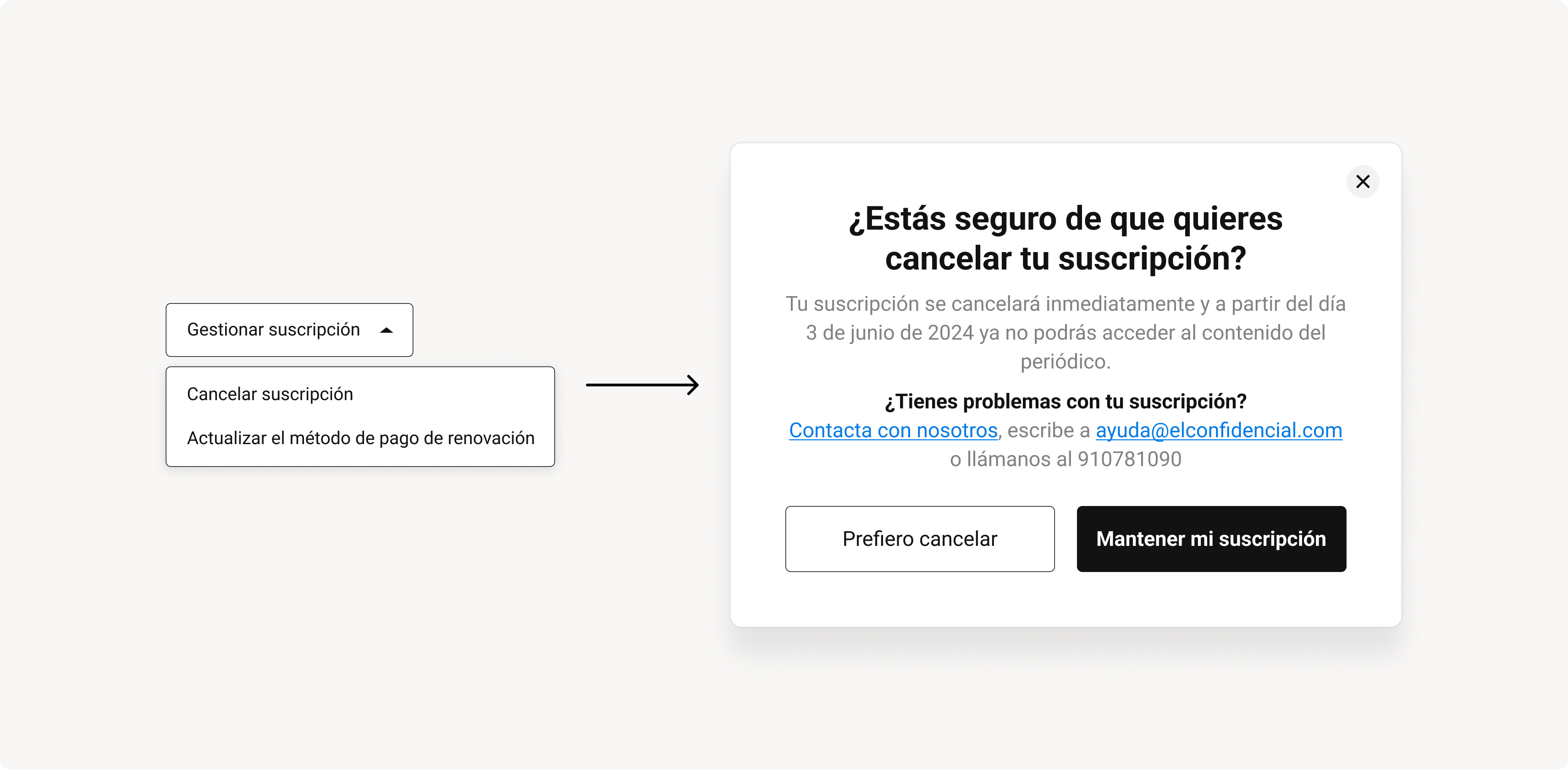
The second step is a single-question survey: a dropdown with the reason for cancelling, plus an open text field for anything that doesn’t fit. The result surprised me more than the retention rate itself: 95% of users who reach this step complete the form, and ~18% pick “other” and write something in their own words. When you ask people directly, in the moment they’re about to leave, most of them answer. Off-boarding turned out to be the cleanest qualitative source the product had — over 16,000 structured cancellation reasons captured to date, which the product and editorial teams keep mining for content and pricing decisions.
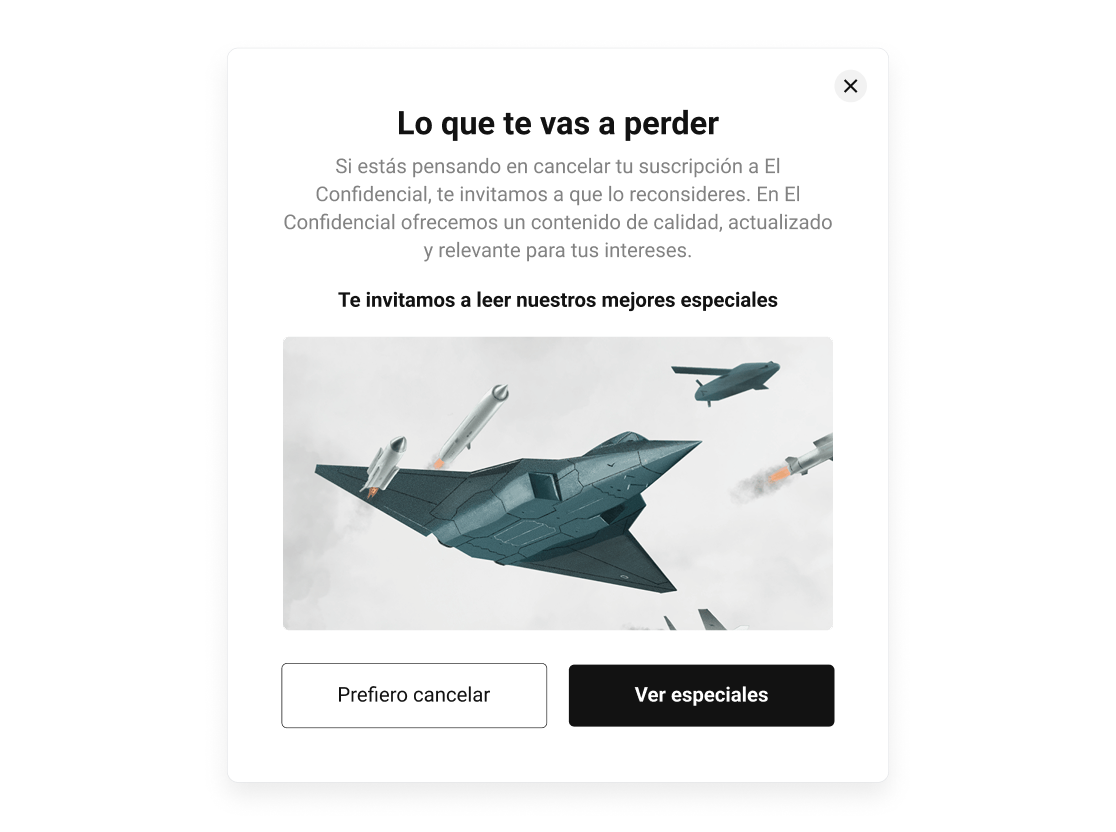
Only users citing “content” or “lack of value” reach this screen — others skip it entirely. It surfaces premium stories and data-driven reports they’d be losing. Because the path is contextual, the reminder lands when it’s actually relevant: nobody who left because of price is forced through an editorial pitch that doesn’t apply to them.
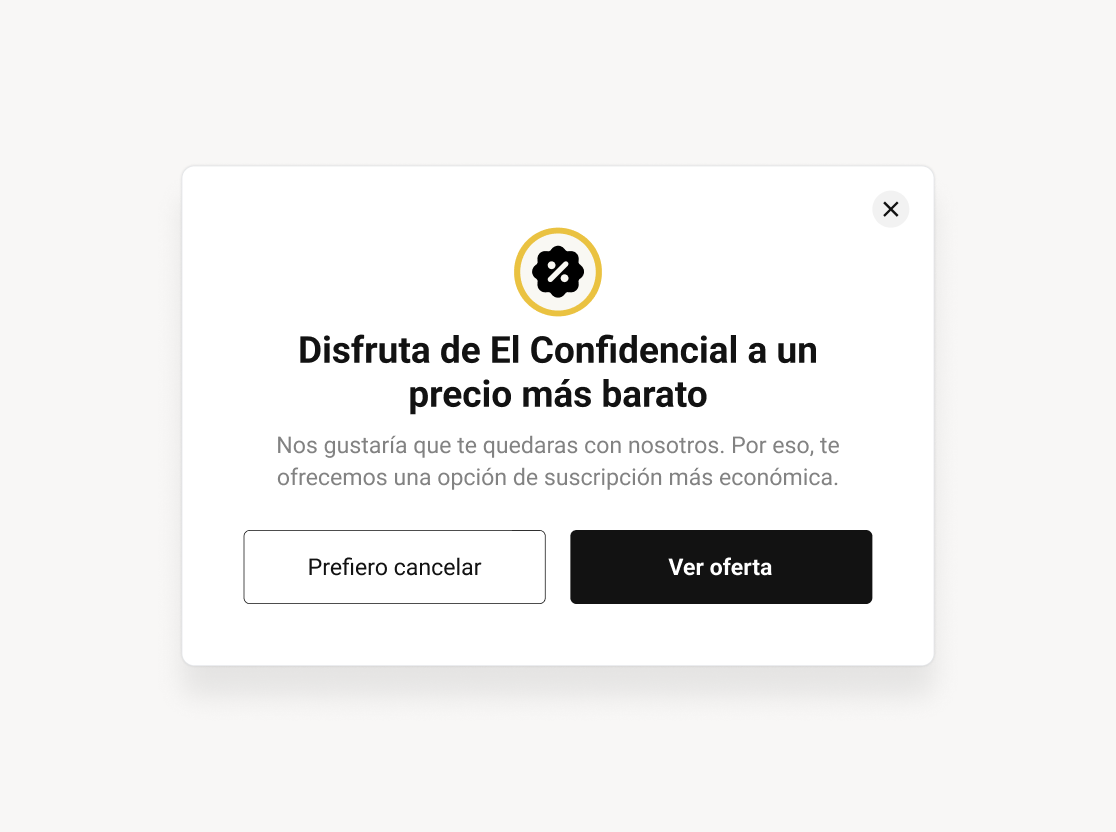
For users still set on cancelling, the flow ends with a retention layer that proposes a more affordable subscription — framed as a way to stay on board, not as a hard discount wall. A clean exit lives next to it with the same visual weight: “Prefiero cancelar” is right there, no dark pattern. The survey signal pushed later iterations to layer segment-specific options on top of this base — for example, a Wall Street Journal bundle aimed at long-tenure subscribers paying full price. That bundle answers a specific finding: among those who say they’d come back at a lower price, value-add at the same price point converts better than discount wars.
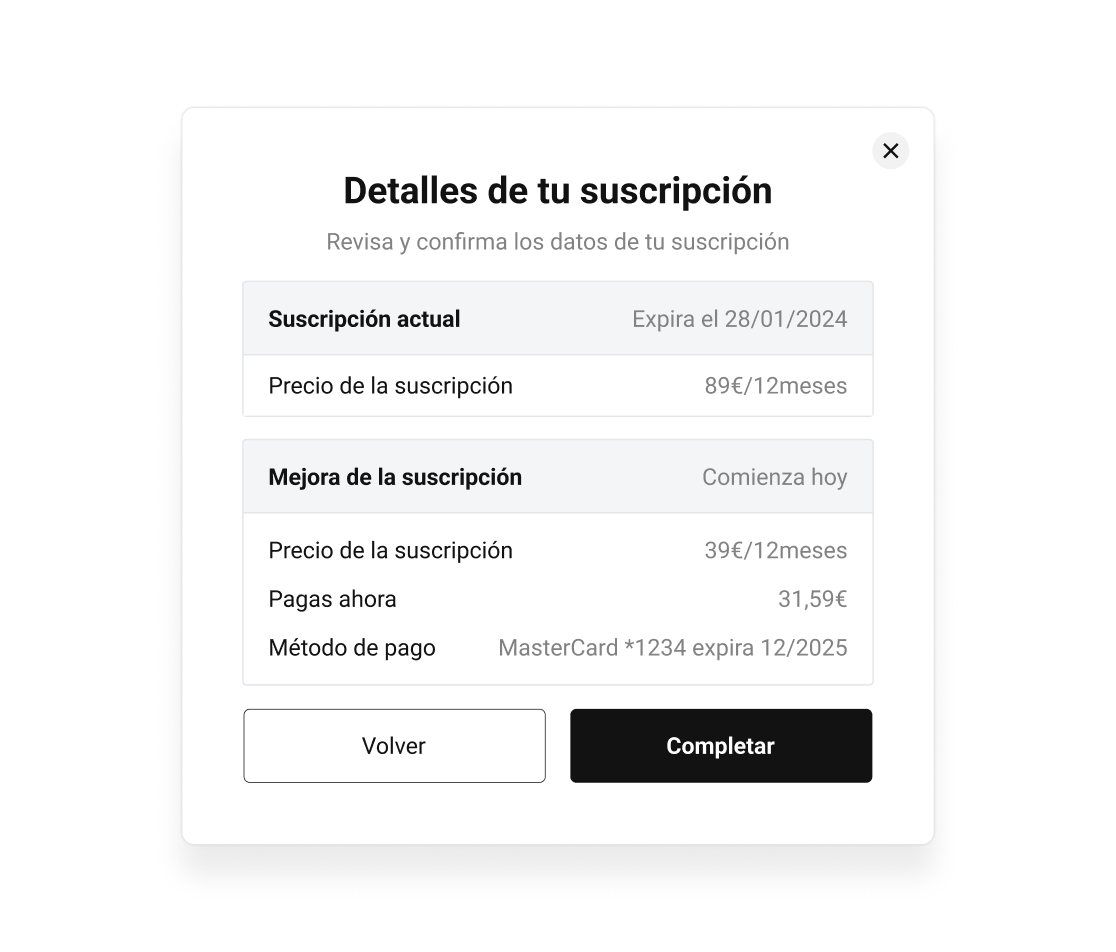
Before final confirmation, users can review and compare their current and new subscription details. This transparent summary shows renewal dates, payment methods, and pricing changes—helping users make an informed decision.
When the user confirms cancellation, the final screen confirms the new state without ambiguity: what happens next, until when access remains active, and a clear way back. No drama, no last-minute pop-ups. A clean exit is what makes a comeback possible.

Consolidated data from production. All percentages are flow metrics — absolute volumes are kept private. Roughly 1 in 3 users entering the flow ends up not cancelling, and the in-flow survey behaves more like a census than a sample.
Five decisions that have aged well across iterations. Each one started as a friction point with stakeholders and ended up earning its place by the data the flow surfaced over time.
Users who explicitly say they’d resubscribe at a lower price flag themselves. That single answer became a routing rule: a discounted winback offer for their original tier, sent only to the segment that opted in. The discount lands where it actually changes behaviour — not as a generic blast that erodes margin across the board.
Across years, price sensitivity grows (50% → 63%). That’s not a problem you solve by always discounting. The Wall Street Journal bundle scaled 8x for long-tenure subscribers paying full price — same price, more perceived value. It competes on the right axis and protects margin while still offering something tangible to the segment most exposed to the price-grow trend.
Within the “Other” responses — the slice where users add free-text feedback — three themes show up consistently: less advertising, better information about how to use the subscription, and richer editorial formats (infographics, maps, data). Those open-ended answers became product backlog items: lighter ad density on subscriber pages, in-product surfacing of premium features long-tenure users didn’t know existed.
The number that surprised me most wasn’t the ~27% retained — it was that 95% of cancellers fill in the survey, and that average satisfaction at exit stays at 3.9/5. People aren’t leaving because they hate the product. They’re leaving because the math stops adding up. Once you see that, retention stops being about persuasion and starts being about pricing intelligence.
The decision that frictioned most with stakeholders early on (showing the access cut-off date upfront) is the one that retains ~7% of users before any offer pops up.
Two years on, the flow is still in production and the team has layered new retention pieces on top — most notably the WSJ bundle — without needing to rewrite the structure. If I were to do it again, I’d instrument the full granular funnel from day one — would have saved years of reconstructing behaviour after the fact.
Two years after launch, the off-boarding flow is still in production as the spine of El Confidencial’s retention strategy. The team has layered new mechanics on top — retention offers, editorial bundles, three winback emails, a homepage modal — without rewriting the original structure. The biggest takeaway isn’t the retained percentage: it’s that exit became a continuous source of structured feedback the company keeps using to make decisions.